Endangered Traditions & Blurry Boundaries: Pottery and Exchange Networks in the Lake Titicaca Basin, Peru
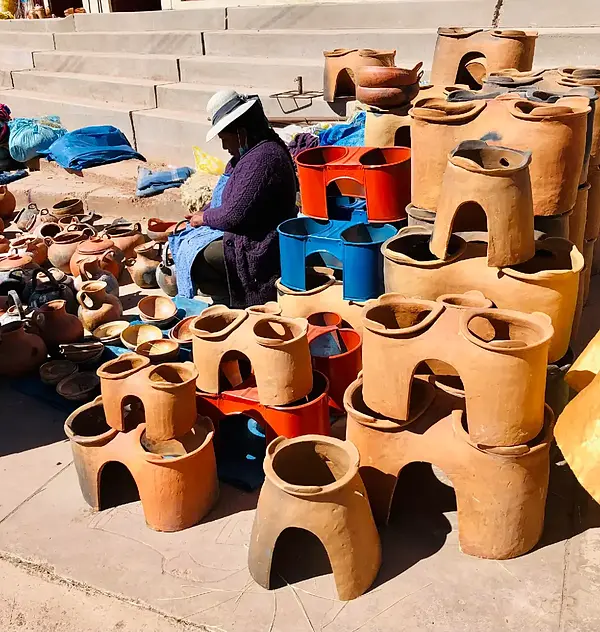
Pucará, located in the northern Lake Titicaca Basin of Peru, is both a bustling town and the location of Pukara, an archaeological site with a 2000-year history of occupation. In 2000, the Pukara Archaeological Project began a multi-year mapping and excavation project, which was recently synthesized in Enduring Monuments: Formative Period Transformations at Pukara, Peru. While Pukara has attracted archaeologists for over a century and daily tourists for decades, the town is more widely recognized in Peru for the toritos de Pucará– clay bulls placed on household roofs– and for the feria, an annual regional market drawing merchants and customers from across the southern Andes for centuries. As with many multi-year research projects, our goals have shifted based on input from local collaborations with potters, weavers, historians, teachers, cultural heritage professionals, and other colleagues. This presentation focuses on our ongoing work with Pucará potters and our proposed fería mapping project to explore disciplinary boundaries and to consider what makes a tradition “endangered” and in need of comprehensive documentation.
Supported by The Kauffman Endowment for Excellence